Can dogs eat peanut butter?
Plain, unsalted peanut butter is fine for most dogs in small amounts. But some nut butters contain the sweetener xylitol, also called birch sugar, which can cause a dangerous drop in blood sugar and liver failure in dogs.
This is an emergency. Call your vet or the ASPCA Animal Poison Control Center at (888) 426-4435 right away (a fee may apply). Xylitol can act within an hour.
Why xylitol matters
Xylitol is a sugar substitute used in sugar-free gum, sweets, toothpaste, some vitamins — and some peanut and nut butters, often “low sugar” or protein products. It’s safe for people, but in dogs it triggers a large release of insulin.
- About 0.1 g of xylitol per kg of body weight can cause a dangerous drop in blood sugar (hypoglycemia).
- About 0.5 g/kg or more can cause acute liver failure.
Signs of low blood sugar can start with vomiting and progress to wobbliness, weakness, collapse and seizures. With early treatment, most dogs with low blood sugar alone recover well; liver failure is much more serious.
How to check a jar
- Read the ingredient list, not just the front label.
- Look for xylitol and birch sugar — they’re the same thing.
- Be extra careful with “sugar-free”, “low sugar”, “keto” or protein-boosted nut butters.
- Brands change recipes, so check every new jar.
Choosing a dog-friendly peanut butter
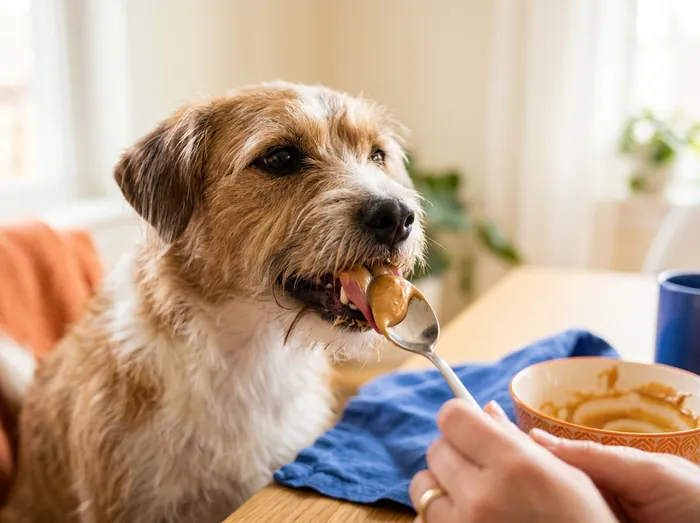
The best choice is plain peanut butter made from peanuts only, or peanuts and a little salt — no xylitol, no added sugar, no chocolate. Even a safe peanut butter is high in fat and calories, so it’s a treat, not a food group.
How much?
- A lick or a thin smear for small dogs; up to about a teaspoon for large dogs.
- Great for hiding pills or filling a food-stuffable toy — just use a small amount.
- Skip it for dogs with pancreatitis or that are overweight, unless your vet agrees.
Frequently asked questions
Is “natural” peanut butter always safe?
Not automatically. “Natural” isn’t a guarantee that a product has no xylitol. The ingredient list is the only reliable check.
What other products contain xylitol?
Sugar-free gum and mints, some sweets, toothpaste and mouthwash for people, some chewable vitamins, baked goods and protein bars. Keep bags and handbags out of your dog’s reach.
Can dogs eat other nut butters?
Plain almond or cashew butter without xylitol is not toxic, but it’s high in fat. Never give macadamia nuts, which are toxic to dogs.
Sources
This article is general information, not veterinary advice. Every pet is different — for questions about your own pet’s health, talk to your veterinarian.