Why do cats purr? It’s not always happiness
Purring most often means a cat is relaxed and content, but cats also purr to greet, to ask for attention or food, and to soothe themselves when stressed, sick or in pain. Body language and context tell you which.
How do cats purr?
Purring is made in the voice box. As the cat breathes in and out, muscles rapidly open and close the gap between the vocal folds — in cycles of about 20–40 milliseconds — while the diaphragm keeps the vibration going. That’s why the purr continues on both the in-breath and the out-breath with only a tiny pause between.
Five reasons cats purr
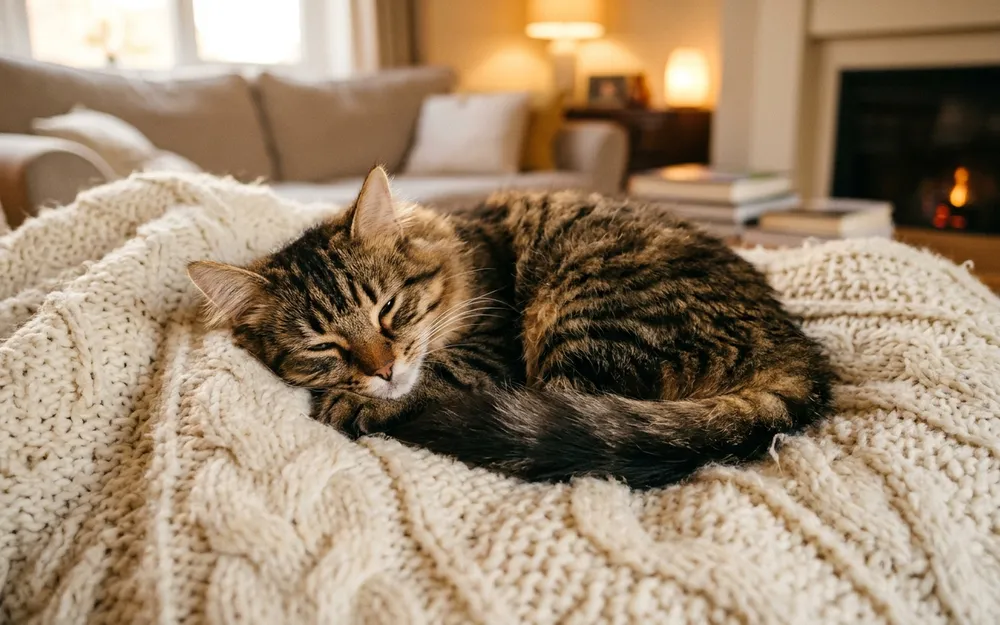
- Contentment. The classic purr: drowsy in a warm spot, being stroked, kneading a blanket, after a meal. The face and body are relaxed.
- Greeting. A short purr when meeting a favourite person or a friendly cat. Mother cats purr as they approach their kittens.
- Asking for something. Cats purr while rubbing against you, asking to be petted or fed.
- Self-soothing. Some cats purr when anxious — at the vet, after a stressful event or while recovering from surgery.
- Pain or illness. Cats can purr when they are sick, injured or even close to death, possibly as a way to comfort themselves.
Kittens and purring
Kittens can purr from about two days old, mostly while nursing. It may help the mother know all is well. Kneading while purring is a leftover from those nursing days.
How to tell a happy purr from a worried one
| Probably content | Possibly stressed or unwell |
|---|---|
| Relaxed body, soft eyes or slow blinks | Crouched or hunched posture |
| Tail up or loosely resting | Tail tucked tightly around the body |
| Kneading, rubbing, rolling to show the belly | Ears low or turned to the side |
| Eating and playing normally | Hiding, not eating, not grooming |
If your cat is purring but also hiding, eating less or behaving differently, have them checked by a vet — cats are very good at masking pain.
Frequently asked questions
Why does my cat purr when I pet them?
It usually means they’re enjoying it and want you to continue.
Do cats purr when they are in pain?
Yes, some do. Purring alongside hiding, poor appetite or a hunched posture is a reason to call your vet.
Can all cats purr?
Domestic cats and many small wild cats purr. Most big cats that roar, like lions, don’t purr in the same continuous way.
Sources
This article is general information, not veterinary advice. Every pet is different — for questions about your own pet’s health, talk to your veterinarian.