Why do dogs eat grass? Is it normal?
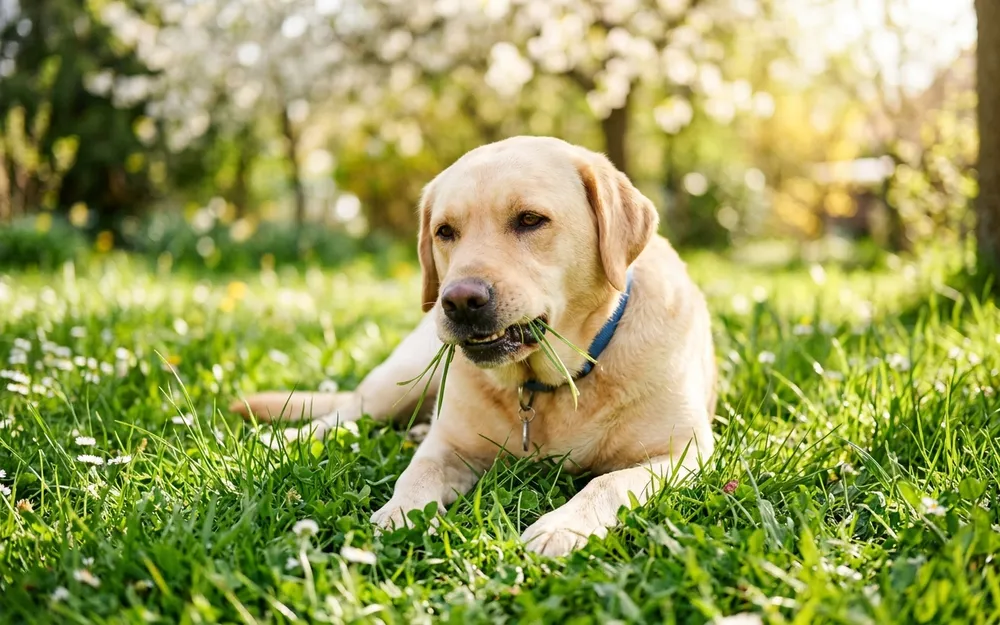
Grass-eating is common and usually normal dog behaviour. Studies suggest fewer than a quarter of dogs vomit afterwards, and most aren’t unwell beforehand. The real risks are pesticides, parasites and eating so much it causes a blockage.
Do dogs eat grass because they feel sick?
That’s the popular theory, but the evidence doesn’t back it up for most dogs. In a small study at the UC Davis School of Veterinary Medicine, only about 22% of dogs regularly vomited after eating grass, and only around 9% often seemed ill beforehand. The researchers concluded that grass and plant eating is a normal behaviour of domestic dogs.
The most likely reasons
- Instinct. Wild relatives such as wolves eat plant material too, both directly and in the stomachs of their prey.
- Hunger and timing. One study found dogs graze more before a meal than after one.
- Fiber. Some dogs may be seeking roughage. One case report described a poodle whose years of plant-eating stopped after a switch to a high-fiber diet.
- Boredom or anxiety. Dogs left alone in a yard often graze to pass the time.
- Taste. Plenty of dogs simply like fresh, wet spring grass.
- An empty, upset stomach. Some dogs that vomit yellow bile on an empty stomach eat grass. A small breakfast as soon as you wake up can help.
Is eating grass bad for dogs?
A little grazing is usually harmless. The risks come from what’s on and in the grass:
- Weed killers, fertilizers and pesticides can be toxic.
- Parasite eggs from other animals’ droppings — keep up with regular deworming.
- Large amounts can clump and cause a blockage, especially mixed with other non-food items.
- Toxic plants growing among the grass or in your house.
When to call the vet
Book a check-up if your dog suddenly starts eating grass frantically or much more often, vomits after grazing regularly, or shows diarrhea, weight loss, poor appetite, bloody stool, lip-licking or tiredness. Compulsively eating dirt, rocks or fabric (pica) also needs a vet’s attention.
How to cut down on grass eating
- Walk after meals, when your dog is less hungry.
- Add play, chews and puzzle feeders to beat boredom.
- Ask your vet whether a higher-fiber food makes sense.
- Avoid treated lawns and verges, and keep fresh water outside.
- Teach “leave it” and reward your dog for walking on.
Frequently asked questions
Why does my dog eat grass and then throw up?
Some dogs do vomit afterwards, and grass may irritate the stomach. If it happens often, see your vet to rule out a digestive problem.
Should I stop my dog from eating grass?
Occasional grazing on untreated grass is fine. Stop it on lawns treated with chemicals and if it becomes frequent or frantic.
Do dogs eat grass because of a nutrient deficiency?
Rarely, on a complete and balanced diet. If your vet suspects pica, they may look at diet and other medical causes.
Sources
This article is general information, not veterinary advice. Every pet is different — for questions about your own pet’s health, talk to your veterinarian.